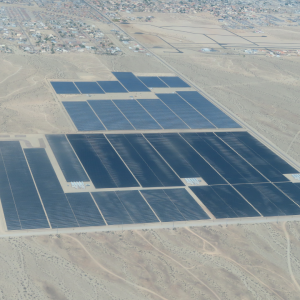
The 2022 annual report encourages collaboration and transparency to support the long-term growth of the renewable energy industry
San Francisco, CA, December 6, 2022 – kWh Analytics, the market leader in Climate Insurance and renewable energy risk management, today released their 2022 Solar Generation Index report. Utilizing operating data provided by industry collaborators and their proprietary Heliostats database, the company identified a persistent pattern of solar asset underproduction across the country.
This year’s report finds that solar assets broadly continued to perform well below expectations, with 2021 operational data showing nearly 8% average underproduction on a weather adjusted basis. Furthermore, the report breaks down project performance by vintage and operational year to highlight the fact that projects constructed after 2015 have missed P50 estimates by 7-13% in their first year of operation, a clear regression compared to production data from earlier vintages. For the first time, the 2022 report also evaluates asset performance as a function of project capacity and mount type, showing that the underperformance trend has not been isolated to any specific group of projects.
“Underperformance affects investors and lenders critical to the success and growth of solar projects,” said Jason Kaminksy, CEO of kWh Analytics. “As an industry, we must collaborate to find ways to course-correct in order to ensure the industry’s long-term financial health.”
The passage of the Inflation Reduction Act has renewed interest in zero-carbon energy assets, and the solar industry alone is expected to expand by nearly 40% over the next five years. To achieve sustainable growth and secure access to necessary capital investment, solar assets will need to exhibit financial health and stability.
“It is imperative that we continue to support the long-term success of the renewable energy sector,” said Jason Kaminksy, CEO of kWh Analytics. “To de-risk investments into zero-carbon assets and encourage resilience throughout the industry, sponsors and lenders should consider accurately priced risk-transfer products, be wary of aggressive production forecasts, and be collaborative with stakeholders to encourage data sharing.”
kWh Analytics generates this index to promote transparency and discussion within the industry. The goal is to provide stakeholders with the necessary data to continue developing and operating solar projects that ensure the industry’s continued growth, and ultimately work together towards a decarbonized future.
ABOUT kWh Analytics
kWh Analytics is a leading provider of Climate Insurance for zero carbon assets. Utilizing their proprietary database of over 300,000 operating renewable energy assets, kWh Analytics uses real-world project performance data and decades of expertise to underwrite unique risk transfer products on behalf of insurance partners. kWh Analytics has recently been recognized on FinTech Global’s ESGFinTech100 list for their data and climate insurance innovations. The Solar Revenue Put production insurance protects against downside risk and unlocks preferred financing terms, and the Renewable Energy Property Product offers comprehensive coverage against physical loss. These offerings, which have insured over $4 billion of assets to date, aim to further kWh Analytics’ mission to provide best-in-class Insurance for our Climate. To learn more, please visit https://www.kwhanalytics.com/, connect with us on LinkedIn, and follow us on Twitter.
As the renewable energy insurance market continues to grow, there are risk concerns including catastrophe exposures, inflation and supply chain challenges.
The insurance industry is well aware of the risks and knows it will require increased underwriting, risk capacity and specialized talent to adequately serve the sector.
The renewable energy insurance market is set to grow by more than $200 billion worldwide in the next decade. Solar and wind outpace other forms of renewable energy deployment in North America, while the continent trails Europe and parts of Asia in developing offshore renewable sources.
Solar, in particular, is on the rise, driven by its affordability as well as federal incentives included in the Inflation Reduction Act. Solar has experienced a 33% average annual growth rate in the last decade, according to Solar Energy Industries Association, and with that expansion comes increased exposure to natural catastrophe risks.
An October report from GCube Underwriting found that natural catastrophe and extreme weather event claims continue to hit the renewables sector with greater frequency and severity. The report found that Texas hailstorms resulted in solar losses almost twice as severe as the other top renewable losses of the last three years combined.
“This has been the year of the hail loss,” said Patrick Stumbras, president of PERse, a managing general underwriter that specializes in renewable energy. “The industry has suffered over $300 million in hail losses in 2022 thus far. Ten years ago, I would’ve told you that hail is not a problem, but the footprint has grown so large.”
This year’s hail losses were almost entirely the result of a series of severe convective storms that hit Texas between May and June. Convective storms usually include hail and high degrees of lightning strikes, and are likely to generate tornadoes. Solar installations are most vulnerable to hail, which damages solar panels and takes away their output.
Advancements in solar engineering have led to the development of panels that are more resistant by moving away from hail or turning in the right direction to protect themselves. However, the kinds of panels that are resistant to hail aren’t going to give operators the price break that they would probably want to justify purchasing them, said Ted Dimitry, energy and marine practice leader at Higginbotham.
Dimitry said supply chain issues will impact how soon hail-resistant panels can be purchased and whether they are cost effective enough to bring to market.
“There’s a function of underwriters not necessarily wanting to tell their developers and operators what materials to buy specifically,” said Dimitry. “That’s not really their place. And in some cases, there just isn’t enough data available to see which hail-resistant panels work and how long which ones last.”
Carriers have begun charging solar developers higher premiums with large deductibles in response to recent hail losses. The market hardened dramatically after a 2019 hailstorm caused upwards of $70 million at the Midway Solar project in West Texas, which damaged 400,000 of the plant’s 685,000 panels.
“In 2019 it was really cheap for a solar developer to pay someone else to take the risk at the end of the day,” said Jason Kaminsky, CEO of kWh Analytics, an insurtech that delivers data-enabled insurance for zero-carbon assets.
“It takes a while for things to change,” said Kaminsky. “In the last two or three years, clients are now realizing, ‘Oh I have to wear the risk. I’m wearing a huge deductible and a sublimit and my lender is more exposed to these risks.’”
Now that owners are more on the hook, the solar industry has begun an era of “really high innovation” to understand what’s working and what’s not, said Kaminsky.
Where the Wind Blows
Michael Bernay, CEO and managing director of PERse, likes to tell the story about how almost every CEO of an insurance company wants to have a wind turbine somewhere on their annual report showing that they’re doing renewables.
“They have no idea how to do that or how to get there, but that’s sort of the mandate that they push down into their own underwriting teams and say, ‘Look, you guys, figure it out,’” said Bernay.
The wind and solar sectors face many of the same natural catastrophe perils, such as flood, lightning and wildfire, as other industries such as construction. Wind farm underwriters are also concerned with the availability of cranes and rigging contractors to respond to repairs and installations.
Wind has experienced multiple significant loss events in the past few years, including Hurricane Hanna in 2020 and Tropical Storm Nicholas in 2021. The storms led to losses of $25 million and $35 million, according to GCube.
2021 Winter Storm Uri proved that wind is also susceptible to freezes.
“If a turbine or other facility is not insulated and hardened against severe cold weather, it’s not going to work,” said Dimitry. “It might even be damaged, but underwriters are going to want to see that that hardening has happened, that it’s been winterized, and that winterization has been maintained.”
Because wind turbine machinery breakdown isn’t automatically included in property coverage, it’s critical for insureds to make sure they’re covered there. The same goes for transformer failure, which often needs to be added to coverage or bought by a separate policy.
Dimitry said there has been a focus on increases in deductibles or retentions. Operational deductibles for wind turbines that are out of warranty are typically $250,000 and above, while older assets in the wind sector are going to have higher deductibles.
“Assets that are being built or in construction is a big focus on wind as there have been a number of installation claims,” said Dimitry. “The experience of the contractor is essential to get that priced well.”
While wind, like solar, is prone to losses during convective storms, many wind farms have monitoring systems that can identify when a lightning strike takes place.
“A quick inspection following an event is key to diminishing the potential size of a loss,” said Dimitry. “We’ve seen blades fail following a lightning strike that aren’t taken out of active service and in the worst case bring the whole turbine down. So taking the cost of the loss to insurers for a blade change out is far better than reinstating a whole tower along with the cell of the blades.”
Repair time can lead to business interruption losses, which is why underwriters like to see a preferred supplier agreement for an operator to have a crane company ready to go. If a crane company can’t supply a crane, there should be an agreement to bring somebody else quickly.
“Sometimes different operators will have a shared crane contractor in the same geographic region and some even have their own crane or cranes that they will operate in order to mitigate being charged too much or having long waiting periods,” said Dimitry.
Wind, the most prevalent source of renewable electricity in the U.S., is still in the infancy stages of offshore development. Most of the country’s existing offshore wind sources are in the Northeast. In October the U.S. Bureau of Ocean Energy Management (BOEM) finalized the first two zones for offshore wind farms in the Gulf of Mexico, one a 174,000-acre zone south of Lake Charles, Louisiana, and the other a 508,000-acre zone near Galveston, Texas. BOEM said the two areas could generate power for three million homes.
“Offshore wind is finally starting to come,” said Stumbras. “There actually is permitting going on, there are land leases, but every time you kick the football down the field, it seems that some other issue comes up with it.”
Though capacity and rates are well-maintained for fixed offshore wind, Dimitry said domestic carriers are unlikely to write 100% of any given project, instead relying on offshore underwriters in London.
“Typically those policies will be subject to tightened wordings on serial losses and using a marine warranty surveyor to monitor, approve and monitor the installation,” said Dimitry.
More Players Needed
Over the last decade, Stumbras has noticed a dichotomy of sorts surrounding the renewable energy market. Media attention on green energy and, more recently, on environmental, social and governance (ESG) requirements has led many to believe that the renewable market is constantly developing. On the inside, however, he sees a shortage of underwriters and focused investing.
“It’s cool and sexy to be in the space, if you will,” said Stumbras. “Along with that, there’s a limited amount of expertise in the space to underwrite this stuff. So you’re seeing maybe a little bit of an influx of somewhat aggressive capital coming into this space and underwriting or not underwriting these accounts.”
Stumbras is most critical of financially-backed players that enter renewables without doing their due diligence in finding underwriters who know the core sectors well. He recalls traveling to London last year to hire another renewable underwriter and being told by a headhunter, ‘Yeah, that’s great, you’re 13th in line.’”
“What you’re doing is you’re taking people who are either oil and gas or traditional power and you’re saying, ‘okay, now you’re anointed a renewable energy underwriter,’” said Stumbras. “Companies go out and take them and put their capital up.”
With the new wave of renewable players having just experienced major hail losses, Stumbras expects a lot of people to “tighten their belts” for January 1 renewals.
Bernay said insurers remain eager to enter renewables because it is brand new.
“It’s opportunistic in the sense that it is true organic growth,” said Bernay. “That’s what most insurance companies are looking for, ‘How do I grow and where is organic growth?’ It is in renewables.”
Kaminsky, whose company kWh Analytics provides a revenue floor to solar projects by using a leveraged database, thinks that renewable capacity has room to expand as carriers adopt smarter terms and conditions and better incorporate data and natural catastrophe management.
“There’s a fear of nat cat right now happening in insurance and reinsurance and there’s a history in our space of some pretty significant property losses,” said Kaminsky. “We’ve seen carriers dip their toe in and some leave and some come back, and they leave again. And really improving the quality of the underwriting — the data available for underwriting — I think is going to be needed.”
For the renewable energy market to improve profitability in wind and solar and expand into emerging sectors like offshore wind and battery storage, it must also attract and develop young talent.
When we got started in this, renewables were 2% of the premium that would go into the energy sector,” said Bernay. There has since been a noticeable shift, where renewables make up a much more significant portion of the energy sector.
“The culture has changed. Whereas before a young underwriter would see no future in renewables, today that’s the only future that you might have if you were getting into an energy related underwriting position. It’s turned full circle.”
San Francisco, CA, November 8, 2022 – kWh Analytics, the market leader in Climate Insurance, today announced that it has structured a Solar Revenue Put supporting back-leverage financing with Matrix Renewables, the TPG Rise-backed global renewable energy platform, insuring solar production on 143 MW of new-build utility-scale solar projects. For the first time, the Solar Revenue Put policy will provide coverage for the full 26 year amortization term. The projects, Gaskell West 2 & 3, are financed by major lending partners MUFG, HSBC, Commonwealth Bank of Australia, and National Bank of Canada.
The Solar Revenue Put is an insurance policy covering solar production to provide protection against downside risk. The policy serves as a credit enhancement for financial investors, allowing asset owners to achieve more favorable financing terms. The addition of the Solar Revenue Put including Base and Supplemental Coverage has significantly reduced Matrix Renewables’ DSCR sizing requirements, and provides 26 total years of production insurance.
“The passage of the Inflation Reduction Act has accelerated demand for renewable energy projects. Our product allows sponsors to deploy more MWs using less capital, something that’s increasingly important in today’s rising cost environment,” says Jason Kaminsky, kWh Analytics’ CEO.
The Solar Revenue Put has insured production for nearly 3GW of renewable generation capacity, including portfolios ranging from thousands of residential rooftops to utility-scale plants. Portfolios backed by the Solar Revenue Put are able to support higher leverage levels or lower credit spreads, reducing equity checks while mitigating downside risk. The Supplemental Coverage extends these debt sizing and risk mitigation benefits beyond ten years, to match the term of debt amortization.
ABOUT Matrix Renewables
Matrix Renewables is a renewable energy platform created and backed by global alternative asset manager TPG and its $15 billion impact investing platform TPG Rise. Matrix Renewables’ current portfolio is comprised of 2.3 GW of operational, under construction, or near ready-to-build solar PV projects and a further 7.3 GW pipeline of renewable energy projects under development, across North America, Europe, and Latin America. For more information, visit matrixrenewables.com or send an email to info@matrixrenewables.com.
ABOUT KWH ANALYTICS
kWh Analytics is a leading provider of Climate Insurance for zero carbon assets. Utilizing their proprietary database of over 300,000 operating renewable energy assets, kWh Analytics uses real-world project performance data and decades of expertise to underwrite unique risk transfer products on behalf of insurance partners. kWh Analytics has recently been recognized on FinTech Global’s ESGFinTech100 list for their data and climate insurance innovations. The Solar Revenue Put production insurance protects against downside risk and unlocks preferred financing terms, and the Renewable Energy Property Product offers comprehensive coverage against physical loss. These offerings, which have insured over $3 billion of assets to date, aim to further kWh Analytics’ mission to provide best-in-class Insurance for our Climate. To learn more, please visit https://www.kwhanalytics.com/, connect with us on LinkedIn, and follow us on Twitter.
San Francisco, CA – September 29th, 2022 – kWh Analytics, a leading provider of Climate Insurance for renewable energy assets, announced that it has named Michael Bachrodt as the company’s new Chief Operating Officer.
The news comes on the heels of kWh Analytics’ $20 million Series B funding announcement, which ushered in a new era of rapid growth for the firm. kWh Analytics has also recently been recognized on FinTech Global’s ESGFinTech100 list for their data and climate insurance innovations. “We’re entering an exciting new phase as we continue to scale and launch new products that support the energy transition,” said Jason Kaminsky, CEO of kWh Analytics. “Michael’s combination of insurance and renewable energy finance expertise and considerable executive leadership experience makes him a perfect fit for kWh Analytics.”
Bachrodt has over 20 years of project finance, transaction management, and underwriting experience, most recently serving as Vice President, Structured Finance for OYO Hotels. Bachrodt’s work at OYO saw him lead global debt and growth capital initiatives. He also served as Senior Vice President for Bridge Bank, where he led the renewable energy project finance group. In prior roles, Bachrodt led project finance transactions at SunEdison and negotiated power purchase agreements at Pacific Gas & Electric Company.
“kWh Analytics has tremendous growth prospects. They are truly proving themselves as data-driven leaders in renewable energy and asset insurance,” notes Bachrodt. “I’m thrilled to join this enterprising team at such an exciting time.”
Bachrodt earned his MBA from Harvard Business School, and holds a bachelor’s degree in business administration from the University of Notre Dame.
ABOUT KWH ANALYTICS
kWh Analytics is a leading provider of Climate Insurance for renewable energy assets. Utilizing their proprietary database of over 300,000 operating renewable energy assets, kWh Analytics uses real-world project performance data and decades of expertise to accurately price and underwrite unique risk transfer products on behalf of insurance partners. The Solar Revenue Put production insurance protects against downside risk and unlocks preferred financing terms, and kWh Property Insurance offers comprehensive coverage against physical loss. These offerings, which have insured over $3 billion of assets to date, aim to further kWh Analytics’ mission to provide Insurance for our Climate. To learn more, please visit https://www.kwhanalytics.com/, connect with us on LinkedIn, and follow us on Twitter.
Originally posted in Origis Services’ Power Players RE+ 2022 Special
Sarath Srinivasan, Vice President, Head of Product of kWh Analytics, joins Power Players host Michael Eyman to discuss the 2022 Solar Risk Assessment Report and the critical industry issue of solar asset underperformance. The pair discuss the implications of the Inflation Reduction Act, the importance of accurate P50 estimations, and the consequences of underperformance on equity cash flows.
“Last year analysis by renewables performance aggregator and insurance provider kWh Analytics highlighted the extent of solar asset underperformance against P50 estimates in the US. Here, the company’s Sarath Srinivasan details some of the reasons behind that underperformance.”